

- 德国HYDRO-BIOS公司
- 丹麦KC-Denmark公司
- 德国SubCtech公司
- 法国HYDROPTIC公司
- 青岛道万科技有限公司
- 丹麦MicroWISE公司
- 冰岛Star Oddi公司
- 德国AMT公司
- 英国RS AquaE公司
- 英国Valeport公司
- 英国C-MAX公司
- 英国Impact Subsea公司
- 加拿大AML公司
- 加拿大Pro-Oceanus公司
- 加拿大Metocean公司
- 加拿大RBR公司
- 挪威Aanderaa公司
- 芬兰Vaisala公司
- 美国Apogee公司
- 美国Licor公司
- 美国JW Fishers公司
- 美国Seapoint公司
- 美国Kovacs公司
- 美国SeaView System公司
- 美国SONOTRONICS公司
- 美国Turner Designs公司
- 美国SofarOcean公司
- 美国PST公司
- 青岛水德科技有限公司
-
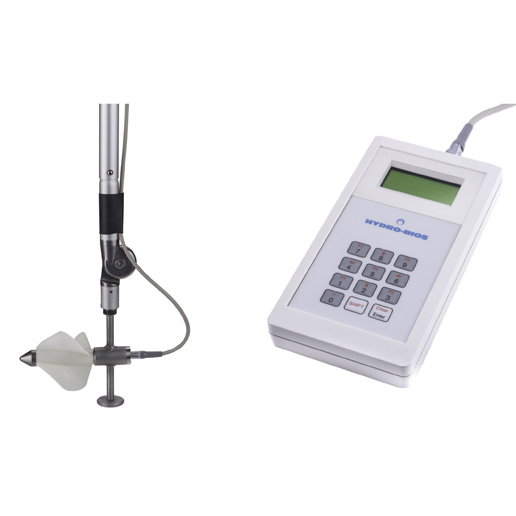 HYDRO-BIOS: Rod Held Current Meter RHCM
This portable device is a point-by-point measuring instrument for assessing the current speeds in running waters. The RHCM consists of a hydrometric three-blade impeller at the lower end of a telescopic rod and a splash-proof Hand Terminal. The measuring head can be angled up to ±90°. The measuring values are displayed together with a date and time stamp on a hand terminal. They can be stored and transferred to a PC by means of the software OceanLab 3. At the PC the measuring files are stored in ASCII format for processing with current word processing, spread sheet and database software.
-
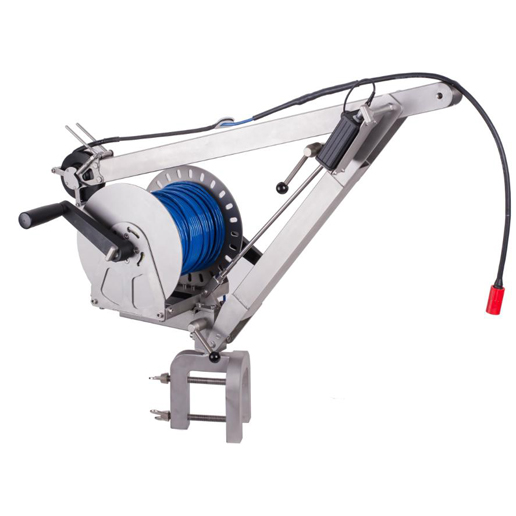 HYDRO-BIOS: Winch
Hand Winch
-
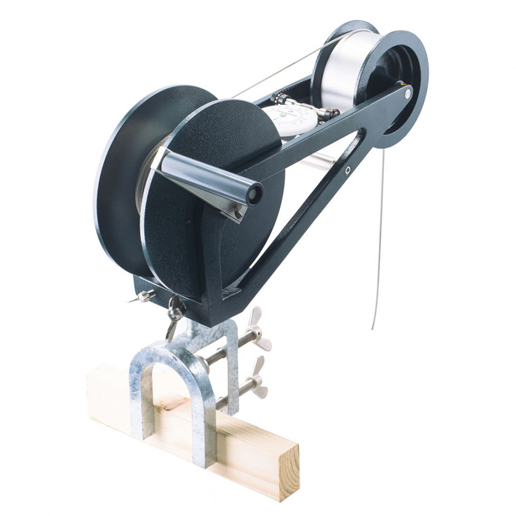 HYDRO-BIOS: Hand Winch
The winch is made of sea-waterproof aluminium and additionally protected against corrosion by an enamel finish.
A counting wheel allows to read out the length of wire paid out. Zero setting is possible. The rope can be fixed at any desired depth. A heavy double-screw steel clamp allows for easy fixing at the walls of boats, bridges, rails, well pipes, etc. Rope can be ordered separately at any length up to 200m.
-
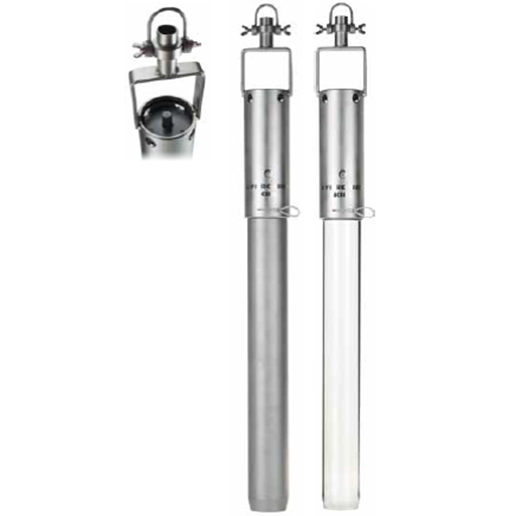 HYDRO-BIOS: Sediment Corer
The Sediment Corer is easy to handle and can be operated manually in shallow waters with a push rod or on a rope simply using gravity in greater water depths. During descent the plastic valve flap on top of the transparent plexiglass tube is held open to let the water flow freely through the tube. To retrieve the sample the corer is lifted from the sediment and the water pressure at the valve flap closes the tube. A vacuum is holding the sediment sample in place and is preventing washout.
Out of the water the provided piston is put into the lower end of the tube. The tube holder with rope stirrup is taken off and the tube with the core sample is placed onto the piston. When the tube is now pressed onto the piston the core sample will be removed for examination.
-
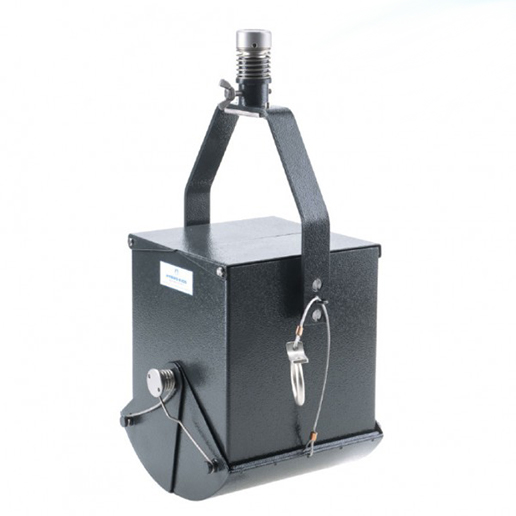 HYDRO-BIOS: Bottom Sampler acc. to Ekman-Birge
The Bottom Sampler acc. to Ekman-Birge is a quantitative sampler with precise sampling area to achieve nearly undisturbed samples in soft grounds. It consists of a sturdy-walled metal cabinet equipped with two spring-loaded jaws which are released by a messenger. Two light plates cover the top opening of the sampler to prevent the sample from being washed out during ascent.
-
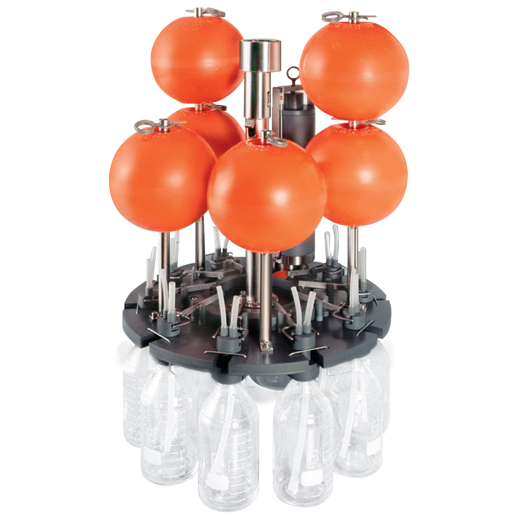 HYDRO-BIOS: Automatic Water Sampler MULTI-LIMNOS
The MULTI-LIMNOS with its programmable time release mechanism has been designed to automatically collect up to 10 water samples in water depths down to 30 metres. The system is equipped with 10 Duran glass bottles of 1 litre capacity each, which can also be used as transportation and storage vessels. The bottles are screwed into modified LIMNOS headpieces and attached to the base plate. When the system is lowered to the desired water depth all bottles are closed. They are opened successively according to the preselected time intervals. When the bottles are filled with water, they are automatically closed by integrated check valves. The MULTI-LIMNOS is equipped with a microprocessor-controlled Motor Unit, activating the bottles in pre-programmed time intervals in real-time (date and time). The operation schedule is programmed via PC by using OceanLab 3 software.
-
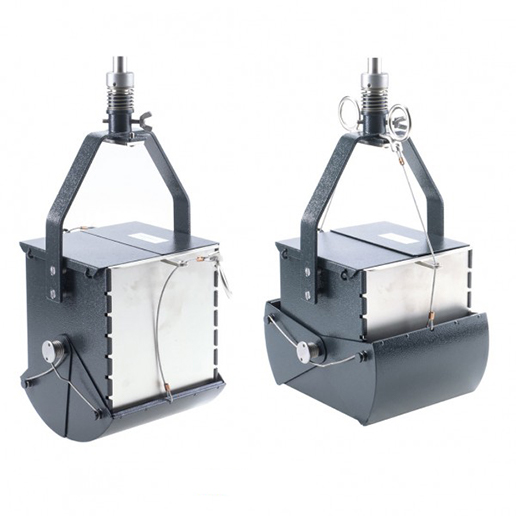 HYDRO-BIOS: Bottom Sampler acc. to Lenz
The Bottom Sampler acc. to Lenz is a modified version of the Ekman-Birge model. This precise quantitative sampler is equipped with dividing sheets to separate the sample into 5 layers of 20 mm thickness. These layers can then be removed separately for individual examination. The Lenz sampler consists of a sturdy-walled metal cabinet equipped with two spring-loaded jaws which are released by a messenger. Two light plates cover the top opening of the sampler to prevent the sample from being washed out during ascent.
-
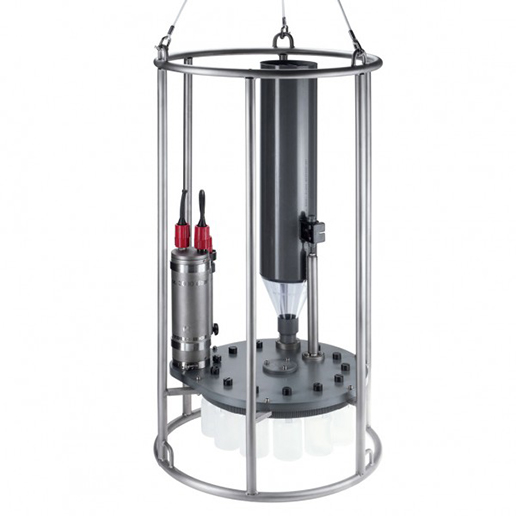 HYDRO-BIOS: Multi Sediment Trap
The rugged titanium array of the Multi Sediment Trap encapsulates the singular standard Sediment Trap (444 000) together with a motor-driven rotary table that can accommodate 6, 12 or 24 plastic collecting bottles. The instrument has been designed as a light and handy instrument for autonomous operations in lakes, continental sheIf and aquatic environments with relative high vertical particulate flux value. It has proven its reliability during numerous long-time operations in arctic, antarctic, tropic and sub-tropic environments. The instrument does not need heavy moorings and can be easily deployed and recovered from smaller vessels. The cylindrical trap is equipped with a dismountable baffle grid at the opening to reduce turbulences, avoiding wash out of the sediment from the upper part of the cylinder. The inside of the trap is completely metal-free. The tubular design of our Sediment Trap provides a relatively small sampling area but cares for reliable sedimentation of suspended matters even under turbulent environmental conditions. It avoids the risk of re-suspension of the sample as it can regularly be detected inside large-area conical sediment traps. The collecting bottles of the Multi Sediment Trap are isolated from the surrounding environment when inactive. During deployment and recovery operations the trap bottom is open allowing a free flow through the body. Power supply is made by 3 long-time lithium batteries, placed inside an external battery housing. The operation schedule is programmed via PC by using OceanLab 3 software. Preselect active periods for the collecting bottles from 1 minute up to 8760 hours in real time (year, month, day, hour, minute) or as individual time intervals (hours and minutes).

Official WeChat

Official Website